
By Hussein Najjar
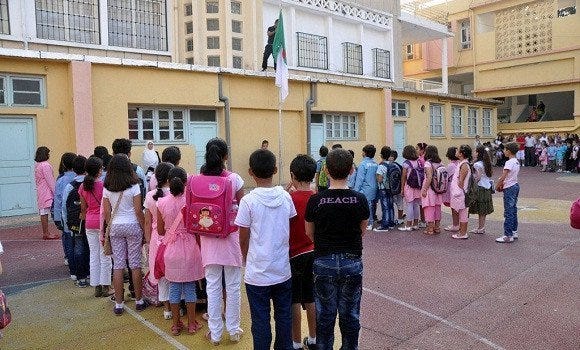
On 21 September 2026, Algerian pupils will finally return to class. For many of them the break will have lasted more than four months — from the end of exams in mid-May until late September. What looks on the calendar like a long holiday is, for a growing number of researchers and teachers, something closer to a cognitive and behavioural interruption.
The decision to push the start of the 2026–2027 school year to 21 September was taken at the highest level. It continues a recent pattern in which the return to school has repeatedly settled around the third week of September. Official explanations cite extreme heat in the southern wilayas, pressure on the electricity grid, and the desire to extend the tourist season. Whatever the stated reasons, the result is the same: one of the longest continuous school interruptions in the world for a national education system of roughly twelve million pupils.
The brain on pause
Educational psychology has a well-documented name for what happens when formal learning stops for months: summer learning loss. Studies consistently show that children, especially those from lower-income households, lose ground in reading and mathematics during long breaks. The losses are not uniform. Skills that require continuous practice — decoding text, retrieving arithmetic facts, sustaining attention — decay fastest. When the interruption stretches beyond three months, the recovery period lengthens. Teachers in Algeria already report that the first weeks of the new year are spent re-teaching material that should have been retained.
The effects go beyond forgotten facts. Prolonged unstructured time alters the brain’s regulatory systems. The prefrontal cortex, still maturing throughout childhood and adolescence, is responsible for executive functions: planning, impulse control, working memory, and the ability to delay gratification. These capacities are strengthened by predictable routines, clear expectations, and regular cognitive demands. When the daily structure of school disappears for four months, many children experience a measurable decline in self-regulation. The longer the vacuum, the harder the re-entry.
Sleep patterns shift. Screen time expands. Physical activity often declines. Cortisol and dopamine rhythms that had adapted to the school day become dysregulated. For younger children the result can look like irritability, difficulty concentrating, and emotional volatility once classes resume. For adolescents the picture is more complex and potentially more damaging.
Behaviour in the vacuum
A child who spends four months without the containing framework of school does not simply “rest.” The absence of structured adult supervision, peer groups organised around learning, and daily purpose creates space that other forces readily fill. In neighbourhoods where after-school programmes, sports clubs or supervised leisure are scarce, the street becomes the default environment. There, status is negotiated differently. Risk-taking is rewarded more quickly than delayed academic effort. Exposure to older peer groups, informal economies, and substances increases.
The psychological literature on unstructured time and adolescent behaviour is clear: extended periods without meaningful adult-mediated activity correlate with higher rates of externalising behaviours — aggression, rule-breaking, substance experimentation — and, in some contexts, with internalising problems such as anxiety and low mood. The longer the period, the greater the cumulative exposure. When school finally reopens in late September, teachers inherit not only academic gaps but also behavioural patterns that have had months to solidify.
For the most vulnerable pupils the consequences can be severe. The school day is often the only reliable source of structure, nutrition, social monitoring and adult presence. Remove it for four months and the protective effect collapses. In a society already confronting rising concerns about drug use among young people and the persistent phenomenon of irregular migration known locally as el-harga, the extended absence of the school as a daily institution is not neutral. It enlarges the window of risk.
Inequality written into the calendar
Not every child experiences the long break the same way. Families with resources organise language camps, private tutoring, travel, sports and cultural activities. Their children return with relatively preserved skills and sometimes even enriched experiences. Children whose parents work long hours, who live in dense urban neighbourhoods or remote areas without organised summer programmes, simply wait. The gap that opens during those four months is not closed by a few weeks of remedial classes. It compounds year after year.
This is one of the quietest and most powerful mechanisms of educational inequality. A calendar that systematically lengthens unstructured time privileges those who can purchase structure and penalises those who cannot.
A different solution was available
If the genuine constraint is extreme heat in the south, the pedagogical response is not to close every school in the country for an extra two or three weeks. It is to adapt the timetable locally: earlier morning sessions and a second block of classes beginning in the late afternoon, once temperatures drop. Such adjustments exist in other hot climates. They preserve instructional time while protecting children from the worst of the heat in buildings that still lack adequate cooling. A national delay, by contrast, treats the entire system as if it were one climate zone and one economic interest.
What is at stake
Children’s brains are not static. They develop through repeated, sustained engagement with demanding but manageable tasks inside a predictable social environment. Four months of relative disengagement is long enough to weaken executive function, erode academic skills, and open behavioural pathways that are harder to reverse. The cost is paid first by the children who can least afford it, and later by a society that must manage the consequences of a generation that spent too many of its formative summers without the daily discipline of school.
The decision to begin the school year on 21 September is presented as a technical adjustment. Its psychological and social effects are neither technical nor temporary. They accumulate, quietly, inside the minds and habits of the children who live them.